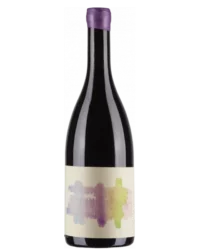
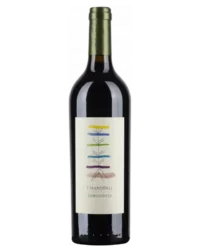
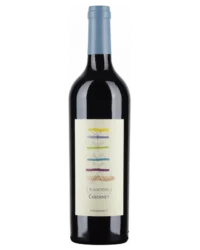
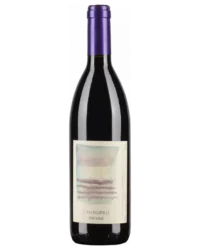
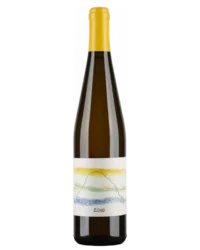
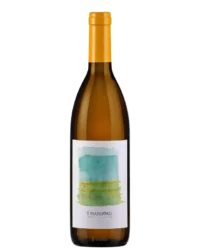
I Mandorli Winery
I Mandorli Winery born in 2002 in the Upper Maremma region of Tuscany, specifically in Suvereto, an ancient medieval village in the Livorno area, located between the renowned Bolgheri region and the wild and unspoiled Maremma. The credit for its establishment goes to Massimo Pasquetti, who, after visiting several hectares of land, was captivated by the beauty of the Suvereto terroir and became its owner.
In 2003, the first Sangiovese vineyards were planted in the northeast part of the estate, and in 2004, the first Cabernet vines were planted in the southeast. Today, the agricultural reality has expanded its plantings by approximately 2 hectares with new Cabernet vineyards facing the sea, positioned in an amphitheater shape to capture the sun’s rays throughout the day, as well as new grafts of Sangiovese and Aleatico on Malvasia di Brindisi vines. Finally, a small portion of Corsican Vermentino has also become part of the vineyards. In recent years, Massimo has embarked on a new project and, falling in love with Pantelleria, decided to purchase one hectare on the island, producing a new bottle with refrigerated grapes delivered by ship.
The land hosting the vineyards is characterized by a rocky subsoil rich in trace elements, sun-drenched, with a constant breeze that envelops the typical Mediterranean scrubland surrounding the vineyards. These vineyards are situated at an elevation of approximately 300 meters above sea level and are divided into two parcels: one to the south overlooking the Gulf of Portoferraio and the Island of Elba, and the other to the north overlooking the Tuscan hinterland.
In the vineyard, great attention is paid to working in a biodynamic manner, with no pesticides or chemical fertilizers. Instead, cover crops and biodynamic preparations are used, and there is a respect for the production cycles with manual harvesting.
In the cellar, you’ll find an approach that closely resembles winemaking practices from a century ago. Modern technology is used solely for hygiene and quality control, while the rest of the process follows a natural approach. Wood is used for the shortest time possible, with a preference for regular vitrified barrels that may be less aesthetically pleasing on the outside (as only the concrete protecting the glass core is visible) but allow the wine to age in contact with glass only, without the release of additional aromas. The wines undergo spontaneous fermentation, contain no added sulfites, are unfiltered, and possess a unique finesse and delicacy that highlights the varietal characteristics intertwined with the typical Mediterranean area.

I Mandorli Winery born in 2002 in the Upper Maremma region of Tuscany, specifically in Suvereto, an ancient medieval village in the Livorno area, located between the renowned Bolgheri region and the wild and unspoiled Maremma. The credit for its establishment goes to Massimo Pasquetti, who, after visiting several hectares of land, was captivated by the beauty of the Suvereto terroir and became its owner.
In 2003, the first Sangiovese vineyards were planted in the northeast part of the estate, and in 2004, the first Cabernet vines were planted in the southeast. Today, the agricultural reality has expanded its plantings by approximately 2 hectares with new Cabernet vineyards facing the sea, positioned in an amphitheater shape to capture the sun’s rays throughout the day, as well as new grafts of Sangiovese and Aleatico on Malvasia di Brindisi vines. Finally, a small portion of Corsican Vermentino has also become part of the vineyards. In recent years, Massimo has embarked on a new project and, falling in love with Pantelleria, decided to purchase one hectare on the island, producing a new bottle with refrigerated grapes delivered by ship.
The land hosting the vineyards is characterized by a rocky subsoil rich in trace elements, sun-drenched, with a constant breeze that envelops the typical Mediterranean scrubland surrounding the vineyards. These vineyards are situated at an elevation of approximately 300 meters above sea level and are divided into two parcels: one to the south overlooking the Gulf of Portoferraio and the Island of Elba, and the other to the north overlooking the Tuscan hinterland.
In the vineyard, great attention is paid to working in a biodynamic manner, with no pesticides or chemical fertilizers. Instead, cover crops and biodynamic preparations are used, and there is a respect for the production cycles with manual harvesting.
In the cellar, you’ll find an approach that closely resembles winemaking practices from a century ago. Modern technology is used solely for hygiene and quality control, while the rest of the process follows a natural approach. Wood is used for the shortest time possible, with a preference for regular vitrified barrels that may be less aesthetically pleasing on the outside (as only the concrete protecting the glass core is visible) but allow the wine to age in contact with glass only, without the release of additional aromas. The wines undergo spontaneous fermentation, contain no added sulfites, are unfiltered, and possess a unique finesse and delicacy that highlights the varietal characteristics intertwined with the typical Mediterranean area.